
The much-anticipated Routledge Companion to Performance and Science (Paul Johnson, Simon Parry and Adele Senior, eds. London, UK: Routledge) is available for pre-order now.
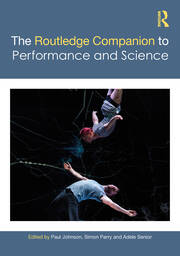
“The Routledge Companion to Performance and Science investigates and illuminates the growing international interest in the intersections and interactions between theatre, drama, performance and the sciences.
These disciplines are explored through an extensive range of essays from artists, practitioners, researchers and scholars, many of whom are working in interdisciplinary, transdisciplinary or multidisciplinary contexts. With a largely contemporary focus underpinned by an introductory section that sets out a history of antecedent intersections, the volume offers a diverse range of perspectives on science, scientific methods, and scientific knowledge in dialogue with performance scholarship and practice. Our understanding of ‘practice’ is capacious, from different performance forms to science communication and interpretation, to scientific approaches to performance, to ways of generating and disseminating scientific knowledge. Within this vast scene, a number of key questions and themes emerge: How can scientific knowledge be interrogated by performance practices? How can performance explore the human implications of scientific development? How can scientific practices be understood through performance theories? How are scientists or scientific practices, and ideas represented in performance?
This is a key resource for scholars and upper-level students of performing arts, science communication, medical and health humanities, science and technology studies, and interdisciplinary arts/humanities/sciences projects.”
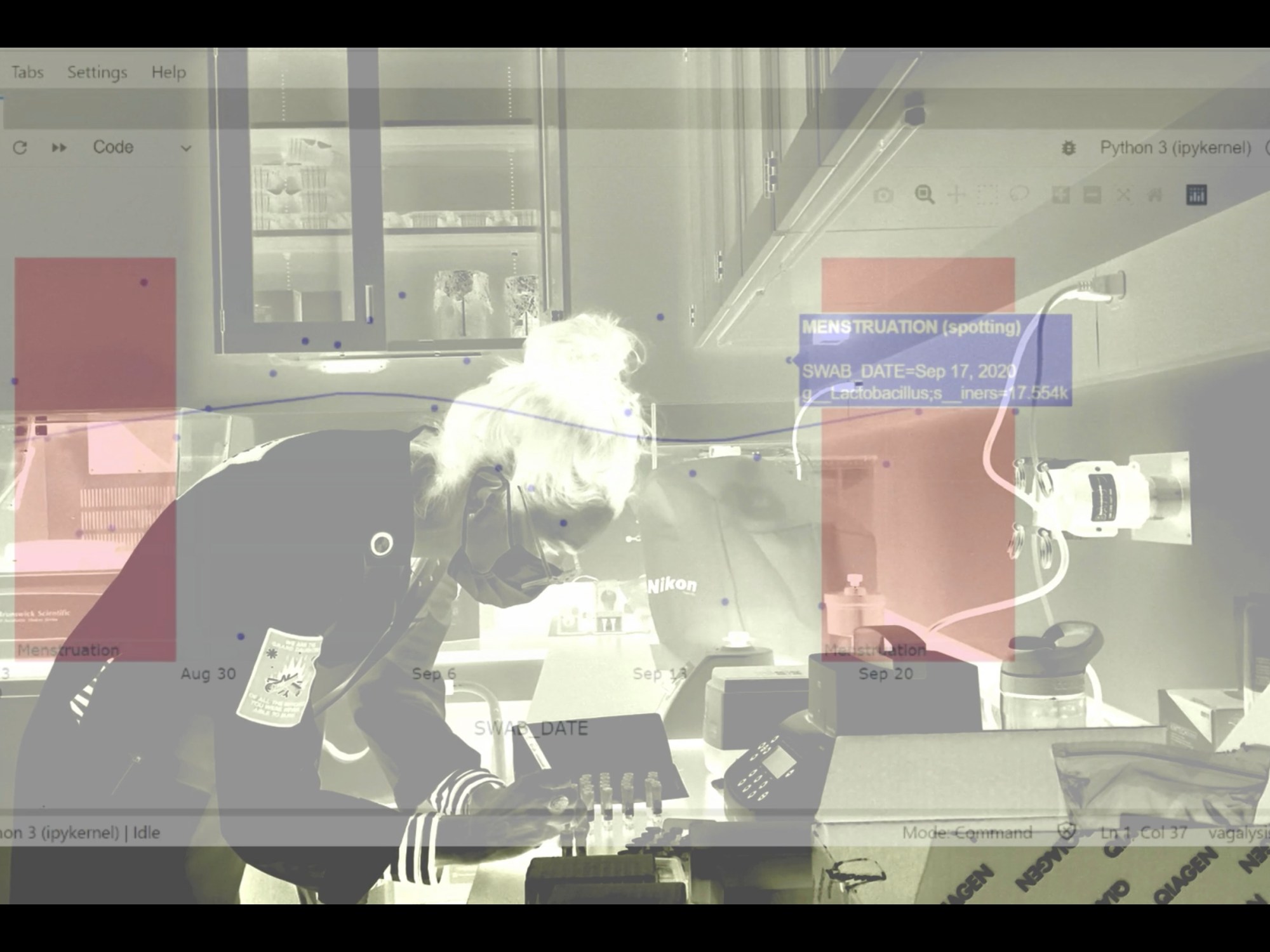
WhiteFeather’s chapter, Blood Magic in Biotech; a case study (Chapter 23) centres on discussion of performance video work(s) generated around enacted processes of vaginal microbial genomic extraction experiments, within the contextual theoretical framework of Technofeminism. Using microbiome DNA analyses applied to a sequence of personal swabs, Hunter employs lenses of data mining and linear reductionism to investigate what is culturally understood as messy emotional terrain: the supposed ‘maladaptive’ and medically problematized bodily technology of the female reproductive system. Rather than focus on high tech potentialities for reproducing capitalist patriarchy, ie. external control over the productivity of women’s and other bodies, the works showcase the artist using biotechnologies for self-empowerment through self-inquiry. She employs technology to draw evidence of her body’s cyclic rejection of invasive infectious agents, as well as rejection of impregnation or reproduction, through what may be understood as an evolutionary biological catharsis—menses—and the microbial communities that characterize it. If biotechnologies are radically shifting the ways we perceive bodies—all bodies—then women have a stake in being in positions of self-determination in the biolab. In taking command of processes still mystifying in the cultural imaginary (ie. genomic sequencing), the artist purposes a transformational approach to working with materials heavily laden with gendered taboo and symbolism through creating her own laboratory-based symbols and gestures.
 whitefeatherhunter.net